The Great Dissolution: America Formalizes Its Exit from the World Health Organization
The Elephant in the Room
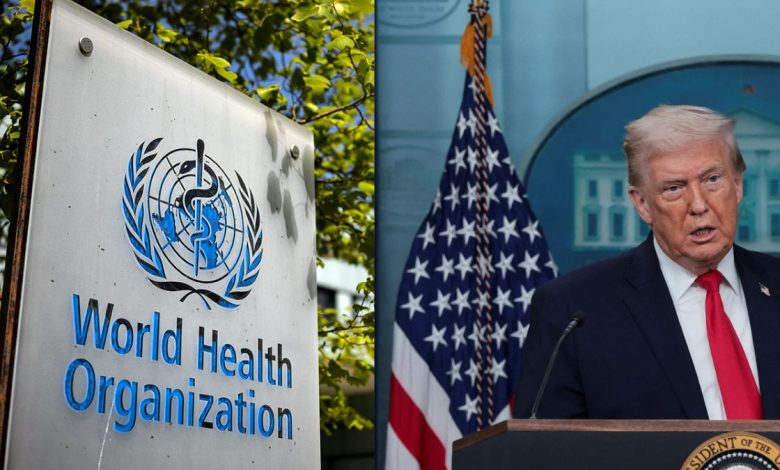
On January 22, 2026, the United States effectively finalized its withdrawal from the World Health Organization (WHO), closing a chapter of multilateral cooperation that began in 1948. This departure is not merely a diplomatic pivot; it is a seismic restructuring of the global health architecture. The process, initiated by President Donald Trump during his first term in July 2020 and subsequently rescinded by the Biden administration in 2021, was re-accelerated via Executive Order 14155 in January 2025. Today, the world faces a reality where the largest economy and historic leader in medical innovation operates outside the primary international body tasked with managing global disease.
The justification for this exit remains rooted in a fundamental dispute over accountability and equity. The White House has consistently cited the organization’s mishandling of the COVID-19 pandemic and its perceived susceptibility to political influence from Beijing. Specifically, the administration pointed to the disparity in funding, where the U.S. contributes nearly 15 percent of the total budget while China, with a significantly larger population, contributes significantly less. This financial friction has led to a total suspension of all U.S. voluntary and assessed contributions, leaving a billion-dollar hole in the global health purse.
Financial Impact and Budgetary Voids
The WHO operates on a biennial budget that relies heavily on voluntary contributions from member states and private entities. For decades, the U.S. was the bedrock of this funding model. With its departure, the organization is forced to reconcile a 2026-2027 budget that is currently only 75 percent funded. The loss of American capital threatens the continuity of life-saving initiatives in low- and middle-income countries, specifically in areas such as polio eradication, maternal health, and tuberculosis monitoring.
Statistical Trends: The Shifting Foundation of WHO Funding
The following table illustrates the dramatic shift in funding sources and the vacuum left by the American exit. The data highlights how private philanthropy and other sovereign nations have attempted to bridge the gap as the U.S. contribution plummeted from its 2022-2023 highs.
| Contributor Entity | 2022-2023 Contribution ($M) | 2024-2025 Contribution ($M) | Budget Share (%) | Funding Type |
| United States | 1,280 | 112 | 1.8% | Mixed (Halted) |
|---|---|---|---|---|
| Bill & Melinda Gates Foundation | 826 | 910 | 14.5% | Voluntary |
| Germany | 722 | 845 | 13.5% | Voluntary |
| GAVI Alliance | 480 | 510 | 8.2% | Specified |
| China | 130 | 145 | 2.3% | Assessed |
| European Commission | 466 | 480 | 7.7% | Voluntary |
The Competitive Comparison: Multilateralism vs. America First
In place of the WHO framework, the U.S. has pivoted toward an America First Global Health Strategy. This shift prioritizes bilateral agreements and transactional health diplomacy over the shared governance of a global institution. While the WHO focuses on universal standards and broad surveillance, the new U.S. model emphasizes direct threat detection and supply chain resilience specifically tailored to American national security interests.
Global Health Strategy Comparison
| Feature | WHO Multilateral Model | America First Bilateral Model |
| Governance | Collective 194-member consensus | Direct sovereign-to-sovereign MOUs |
|---|---|---|
| Priority | Global health equity and universal care | US national security and threat detection |
| Data Sharing | Open Global Influenza Surveillance | Conditional reciprocity agreements |
| Resource Flow | Centralized pool for global emergencies | Targeted assistance to specific allies |
| Regulatory Body | International Health Regulations (IHR) | Independent domestic standards and CDC protocols |
Current Season Context: The Surveillance Crisis
The immediate operational consequence of the withdrawal is the exclusion of American scientists from the Global Influenza Surveillance and Response System (GISRS). For over 70 years, this network has been the primary mechanism for monitoring flu strains and developing annual vaccines. Without direct participation, the U.S. loses real-time access to viral samples and data from 131 countries. Public health experts at the Infectious Diseases Society of America (IDSA) have labeled this move scientifically reckless, noting that pathogens do not respect national borders. The disruption extends beyond influenza; the U.S. has also pulled its personnel from WHO collaborating centers, including 17 high-level labs at the CDC, effectively silencing American voices in the creation of global health guidelines.
The New Geopolitical Vacuum
As the U.S. retreats, other powers are moving to fill the void. Countries like China and Germany have increased their influence within the World Health Assembly, while private donors like the Gates Foundation and even tech giants are taking on roles traditionally held by sovereign states. Critics argue that this privatization of global health management reduces transparency and shifts the focus away from the most vulnerable populations. In Africa, the withdrawal of USAID-supported programs has already led to fractured health delivery models, particularly in primary care and emergency response for infectious diseases like Ebola and mpox. For many nations in the Global South, the U.S. exit represents a betrayal of decades-long stability in favor of a fragmented, unpredictable health architecture.
Intelligence Deep-Dive
Is the United States legally and officially out of the WHO as of 2026?
“Operationally and in practice, the United States is treated as having left the organization as of January 22, 2026. However, a significant legal dispute remains because the WHO and international law experts argue that the U.S. has not met the mandatory condition of paying its outstanding financial obligations, which total over $260 million. Under the 1948 joint resolution, the U.S. reserved the right to withdraw with one year’s notice provided all dues for the current fiscal year are met. The State Department has refused these payments, calling the organization’s opinions meaningless, leading to what legal analysts describe as a very messy and public divorce.”
How will the withdrawal affect the development of annual flu vaccines?
“The withdrawal severely hampers the U.S. ability to participate in the Global Influenza Surveillance and Response System, which is the primary platform for monitoring circulating flu strains. American scientists will no longer have automatic, real-time access to viral samples and data shared by more than 130 member nations. This exclusion creates a high risk of mismatch between seasonal vaccines and the actual viruses in circulation, potentially leading to less effective immunization programs and higher domestic mortality rates during flu seasons.”
What is the America First Global Health Strategy mentioned in the report?
“The America First Global Health Strategy is a policy framework that replaces multilateral cooperation with bilateral deals and transactional health diplomacy. It focuses primarily on protecting American citizens from external biological threats through enhanced domestic surveillance and conditional data-sharing agreements with selected foreign partners. Unlike the WHO’s mission of universal health strengthening, this strategy prioritizes U.S. national security, biosecurity, and the resilience of American medical supply chains over global health equity.”
Which entities are stepping in to fill the funding gap left by the U.S.?
“As the U.S. funding has ceased, the Bill and Melinda Gates Foundation and Germany have emerged as the primary financial pillars of the WHO, with the Gates Foundation now contributing roughly 14.5 percent of the budget. Additionally, GAVI, the Vaccine Alliance, and the European Commission have increased their roles. There is also rising concern about the increased influence of private donors and countries like China, who may use the power vacuum to steer international health policy toward their own specific interests and away from traditional American-led standards.”
What are the immediate impacts of the withdrawal on health programs in Africa?
“In regions like Africa, the withdrawal of U.S. support through the WHO and the restructuring of USAID has led to significant instability in immunization and maternal health programs. Systems that were built on the assumption of predictable external support are now facing fractured delivery models and weakened referral pathways. While the President’s Emergency Plan for AIDS Relief (PEPFAR) continues to operate, it does so under a cloud of persistent uncertainty, making long-term health system investments nearly impossible for many developing nations.”
Executive Summation
The formalization of the United States withdrawal from the World Health Organization marks the end of an era defined by American-led multilateralism and the beginning of a high-stakes experiment in bilateral health diplomacy. By severing ties with the WHO, the U.S. has reclaimed hundreds of millions in annual dues but has simultaneously forfeited its seat at the head of the table where global health standards are written and pandemic responses are coordinated. This move is not just a financial calculation; it is a profound philosophical shift that redefines global health as a tool of national security rather than a shared humanitarian endeavor.
The investigative reality reveals a world in flux. The WHO is currently scrambling to find 25 percent of its required funding for the next biennium, a deficit that will inevitably lead to the reduction of critical disease surveillance programs. Meanwhile, the U.S. finds itself increasingly isolated from the very data networks required to protect its own borders from the next novel pathogen. As private philanthropies and geopolitical rivals like China move to fill the void, the transparency and accountability that the U.S. sought to improve may actually diminish. Ultimately, the success of this exit will be judged not by the dollars saved today, but by the American lives protected—or lost—when the next global health crisis emerges and the world no longer speaks with a unified voice. The Great Dissolution has begun, and the fallout will be measured in the health of nations for decades to come.
