Executive Insights
- Walmart’s Fiscal 2025 revenue hit ~$681 billion, with continued growth projected for 2026.
- CEO Doug McMillon steps down in Jan 2026, succeeded by John Furner.
- Advertising revenue (Walmart Connect) is growing 6x faster than retail sales, becoming a primary profit engine.
- Walmart aims to have 65% of stores serviced by supply chain automation by the end of 2026.
- The company launched ‘Better Care Services’ in 2026, pivoting its healthcare strategy toward digital and pharmacy integration.
As the retail landscape shifts into 2026, Walmart stands at a pivotal inflection point. With fiscal year 2025 revenues reaching approximately $681 billion, the retail giant is no longer just a brick-and-mortar superstore; it is evolving into a high-tech, omnichannel ecosystem. Under the impending leadership of John Furner, who succeeds Doug McMillon in early 2026, Walmart is aggressively pivoting toward Artificial Intelligence (AI), supply chain automation, and high-margin advertising revenue to fend off Amazon and maintain its dominance.
This comprehensive analysis explores Walmart’s financial health, technological innovations, healthcare strategy shifts, and its intensifying battle for membership loyalty.
The Financial Titan: Fiscal 2025 & 2026 Outlook
Walmart’s financial trajectory demonstrates resilience in a volatile economic climate. While traditional retail margins remain razor-thin, the company has successfully diversified its profit pools through service-based revenue streams like Walmart Connect (advertising) and data monetization.
| Metric | Fiscal 2025 Performance | 2026 Projection/Goal |
|---|---|---|
| Total Revenue | ~$681 Billion (+5% YoY) | 3-4% Net Sales Growth |
| Global Ad Revenue | +29% Growth (Q4 FY25) | Continued Double-Digit Growth |
| E-commerce Growth | +20% (US Q4 FY25) | Focus on Profitability over Volume |
| Automation Target | ~50% Fulfillment Automated | 65% Stores Serviced by Automation |
The standout story is Walmart Connect. Advertising revenue is growing approximately six times faster than retail sales. By leveraging its massive database of shopper behavior, Walmart has created a media network that rivals major tech platforms, providing a crucial high-margin buffer that subsidizes low prices on store shelves.
Leadership Transition: The John Furner Era
A major changing of the guard occurs in early 2026 as long-time CEO Doug McMillon steps down, passing the torch to John Furner. Furner, previously CEO of Walmart U.S., is expected to double down on the strategies that have defined the last five years: digital integration and operational efficiency.
Strategic Continuity: Furner’s tenure is anticipated to focus on “execution at speed,” prioritizing the rollout of automated distribution centers and the integration of Generative AI into daily merchandising operations.
AI & Automation: The “Wally” Agent & Supply Chain
Walmart’s 2026 strategy is built on a backbone of silicon and steel. The company is deploying AI not just for customer service, but as a core operational tool.
1. The “Wally” AI Agent
Walmart has introduced internal AI tools, including an agent nicknamed “Wally,” designed for merchants. This system assists in:
- Predictive Inventory: Identifying potential out-of-stocks before they happen.
- Price Optimization: Adjusting pricing strategies in real-time based on local demand and competitor moves.
- Negotiation Support: Providing data-backed insights for supplier negotiations.
2. Supply Chain Automation
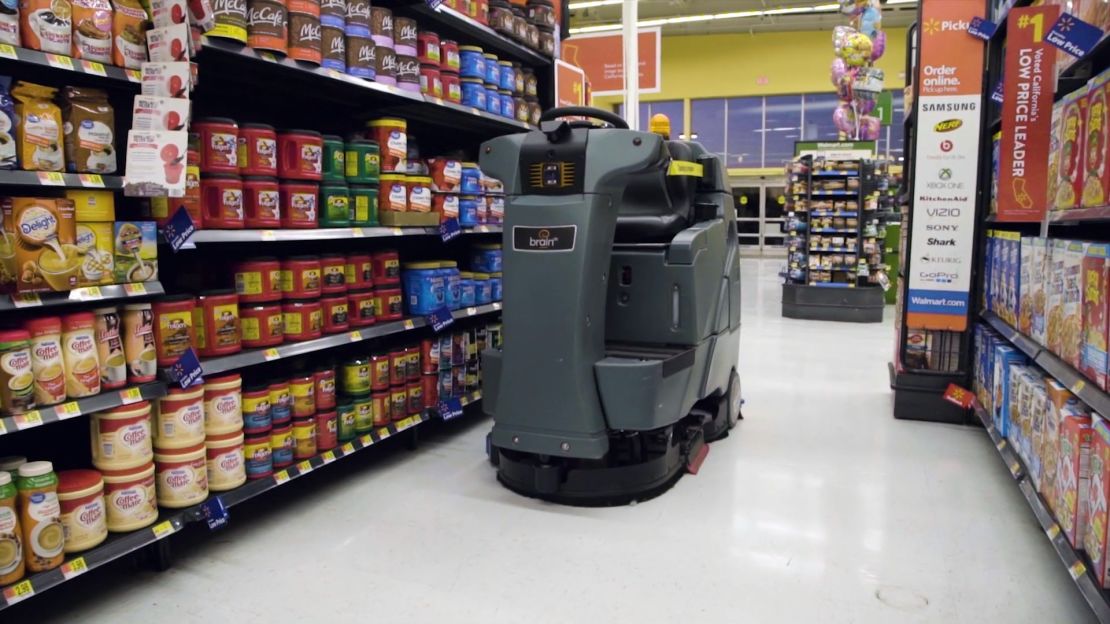
The company has committed to an aggressive automation schedule. By the end of 2026, Walmart aims to have roughly 65% of its stores serviced by automation. This shift means robotics will handle the heavy lifting of sorting and palletizing in distribution centers, speeding up restocking times and reducing reliance on a fluctuating labor market.
Walmart Connect: The Profit Engine
While e-commerce grabs headlines, Walmart Connect (the advertising division) drives profitability. With global ad revenue surging nearly 30% in late FY2025, this division is transforming Walmart’s business model.
- Non-Endemic Brands: Walmart is now selling ad space to brands that don’t sell products in its stores (e.g., automotive, financial services), expanding its total addressable market.
- In-Store Digitization: Digital screens at self-checkouts and TV aisles are being monetized, turning physical foot traffic into digital ad impressions.
- ROAS vs. Amazon: Advertisers are increasingly diversifying spend to Walmart Connect to capture unique grocery-first shopper intent data that Amazon lacks.
Healthcare Reboot: Better Care Services
Walmart’s healthcare journey has seen significant pivots. After facing construction delays and cost pressures that slowed the rollout of physical Health Centers in 2024, the company launched “Better Care Services” in January 2026.
Key Healthcare Initiatives:
- Digital-First Pivot: A shift away from purely building physical clinics to a hybrid model emphasizing telehealth and digital health management tools.
- Pharmacy Wage Investments: In Jan 2026, Walmart raised wages for pharmacy technicians (up to $40.50/hr for leads) to stabilize staffing in this critical high-trust sector.
- Partnerships: Collaborations with major pharma and telehealth providers to offer specialized care (e.g., GLP-1 weight loss support) directly through Walmart channels.
The Battle for Loyalty: Walmart+ vs. Amazon Prime
The membership war remains the defining conflict of 2026 retail. While Amazon Prime retains a massive lead in total subscribers (~180M+ in the US), Walmart+ has carved out a defensible niche centered on grocery and fuel.
| Feature | Walmart+ | Amazon Prime |
|---|---|---|
| Core Strength | Groceries & Fuel | General Merchandise & Entertainment |
| Delivery Speed | Same-day (from store) | 1-2 Days (increasingly same-day) |
| Market Share (Grocery) | ~21-32% (Leader) | ~22% (Challenger) |
| Streaming Perk | Paramount+ | Prime Video |
Walmart’s advantage lies in its physical proximity to 90% of the U.S. population, allowing it to use stores as fulfillment centers for rapid grocery delivery—a logistical feat Amazon struggles to replicate at the same scale.
Sustainability: Ambition vs. Reality
Walmart’s Project Gigaton and zero-emissions goals face headwinds. Reports from late 2025 indicate the company is at risk of missing its 2025 and 2030 emissions reduction targets. However, progress continues in renewable energy, with roughly 50% of global electricity needs now met by renewable sources.
The challenge remains Scope 3 emissions (supply chain), where Walmart must exert pressure on thousands of global suppliers to decarbonize their own operations.
Conclusion
In 2026, Walmart is proving that an old-guard retailer can learn new tricks. By successfully overlaying a high-margin digital advertising business and an automated supply chain atop its massive physical footprint, it has built a moat that even Amazon finds difficult to cross. As John Furner takes the helm, the focus will be on executing this hybrid model: using AI to predict what you want, robots to pack it, and stores to deliver it—all while selling the ad space for the product you just bought.
In-Depth Q&A
Q: Who is the CEO of Walmart in 2026?
John Furner is set to succeed Doug McMillon as CEO of Walmart effective early 2026. Furner previously served as the CEO of Walmart U.S.
Q: What is Walmart’s revenue for fiscal year 2025?
Walmart reported revenue of approximately $681 billion for the fiscal year ending January 31, 2025, representing a growth of about 5%.
Q: What is the ‘Wally’ AI agent?
‘Wally’ is an internal GenAI tool developed by Walmart for its merchants. It assists with predictive inventory management, root cause analysis for stock issues, and price optimization.
Q: How does Walmart+ compare to Amazon Prime in 2026?
While Amazon Prime has significantly more subscribers (~180M+ vs. Walmart’s ~25-30M), Walmart+ dominates in the online grocery sector. Walmart+ focuses on same-day store delivery and fuel discounts, whereas Prime focuses on entertainment and general merchandise shipping.
Q: What is Walmart’s new healthcare strategy for 2026?
In January 2026, Walmart launched ‘Better Care Services,’ a digital-first platform. This marks a pivot from aggressive physical clinic expansion (which saw delays in 2024/25) toward telehealth, pharmacy services, and partnerships for specialized care.